
Future Nation Schools calls on parents to rethink the first year of formal education ahead of 2027 academic year. South Africa has spent years asking whether children are ready for school. We should also be asking whether our schools are ready for the child.
That question is particularly relevant in Grade R, where a child’s first formal experience of school begins to shape their relationship with learning. Children naturally have an instinct to explore, ask questions, make connections and understand how the world works. The classroom they enter can either build on those instincts or leave them at the door.
For years, Grade R has occupied an unusual place in the South African education landscape. It sits between early childhood and formal schooling and is often discussed through the familiar language of school readiness. Recognising letters and numbers, following instructions and developing early language and numeracy skills remain important foundations. So too are confidence, curiosity, communication and the ability to persist when something is difficult.
“Education should never simply be about preparing a child for the next grade. At Sifiso Learning Group, we believe it must prepare young people to think, adapt and contribute meaningfully to the world around them,” says Sizwe Nxasana, Group CEO of Sifiso Learning Group and founder of Future Nation Schools.
Nxasana believes these capabilities need to be cultivated from the beginning of a child’s formal schooling journey. “Grade R is where we can begin nurturing those capabilities. Children are naturally curious. The challenge for education is to build on that curiosity as they move into more structured learning, rather than gradually teaching them to wait for the right answer,” he says.
Quality gives Grade R its meaning
With the Grade R formally incorporated into South Africa’s compulsory schooling framework under the Basic Education Laws Amendment (BELA) Act, South Africa’s focus on access to Grade R has created an important foundation. The next priority is the quality of the experience children receive once they enter the classroom.
The Department of Basic Education evaluation found that attending Grade R had a positive effect on later language and mathematics performance, with the impact varying across schools. The finding reinforces the importance of looking closely at what happens in Grade R and how effectively learning environments support children’s development.
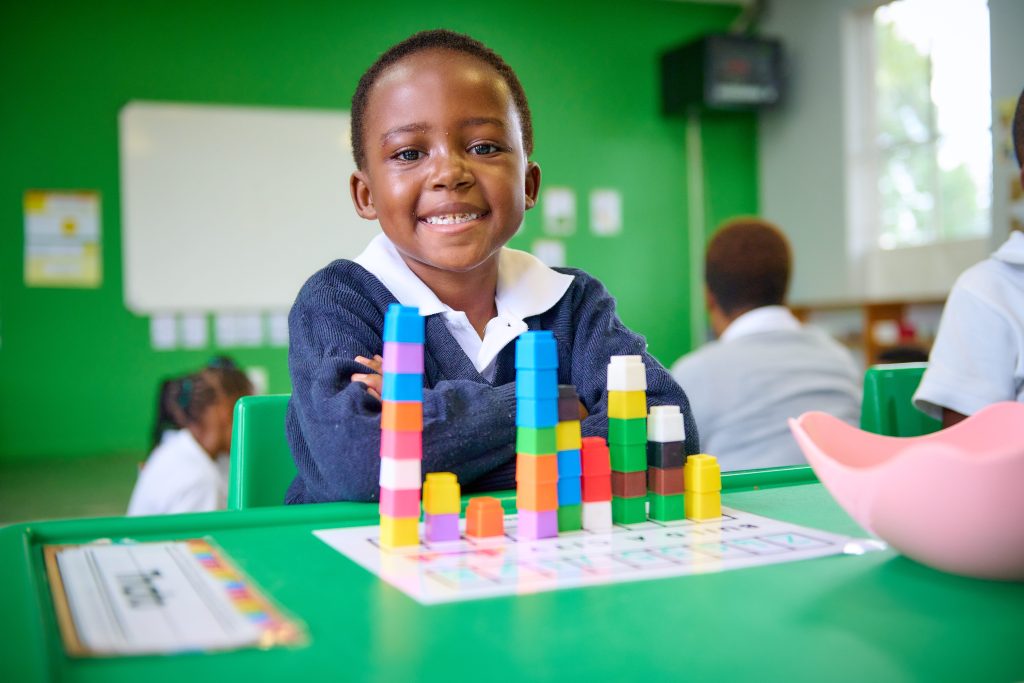
A strong Grade R classroom combines the fundamentals of early learning with opportunities for children to investigate, make connections, communicate their thinking and learn through doing. These experiences help build confidence alongside knowledge and give teachers opportunities to understand how each learner approaches the world.
The need for this broader foundation is becoming more pressing as technology and artificial intelligence reshape how people work and how knowledge is accessed. Schools cannot predict every occupation that will exist when today’s Grade R learners enter the workforce. They can help children develop the ability to learn, adapt, question and apply knowledge in unfamiliar situations.
“We cannot predict every career that will exist or every challenge this generation will have to solve,” says Nxasana. “What we can do is develop young people who know how to learn, who are confident enough to question and who can use what they know to solve problems. If those are the outcomes we want at the end of schooling, we cannot wait until high school to start developing them.”
Building the foundation early
This philosophy sits at the heart of Future Nation Schools’ approach to Grade R and beyond. Future Nation Schools takes an African-centred approach that combines the South African CAPS curriculum with Project-Based Learning and technology. It is through this approach that learners are given opportunities to explore real-world questions, collaborate with their peers, communicate their thinking and apply what they have learned. Foundational academic skills remain central, while curiosity, creativity, communication and problem-solving are developed alongside them.
For Future Nation Schools, starting right means giving children an environment in which their natural curiosity can become disciplined thinking, their questions can become inquiry, and their early confidence can grow into a lasting appetite for learning.
“The first years of schooling deserve careful attention because they establish the culture through which children experience education,” says Nxasana. “We want learners to leave school equipped with knowledge, but also with the confidence and capability to use it.”
Future Nation Schools’ “Start Right, Start Now” campaign encourages parents considering Grade R for 2027 to look closely at the learning environment, teaching approach and values that will shape their child’s educational journey.
Future Nation Schools offers Grade R through to matric at its Fleurhof and Lyndhurst campuses in Johannesburg. Prospective families can attend the school’s Open Day on 17 October 2026 to visit the campuses, meet the school community and learn more about its educational approach.
Grade R is where school begins. It is also where a child’s relationship with learning begins to take shape.
For more articles like this click here.
If you enjoyed this website then check out our other sites: Wedding and Function, Home Food and Travel, Thirsty Traveler, Boat Trips for Africa, Bargain Buys, Business Link.
Need help with your online marketing then visit Agency One