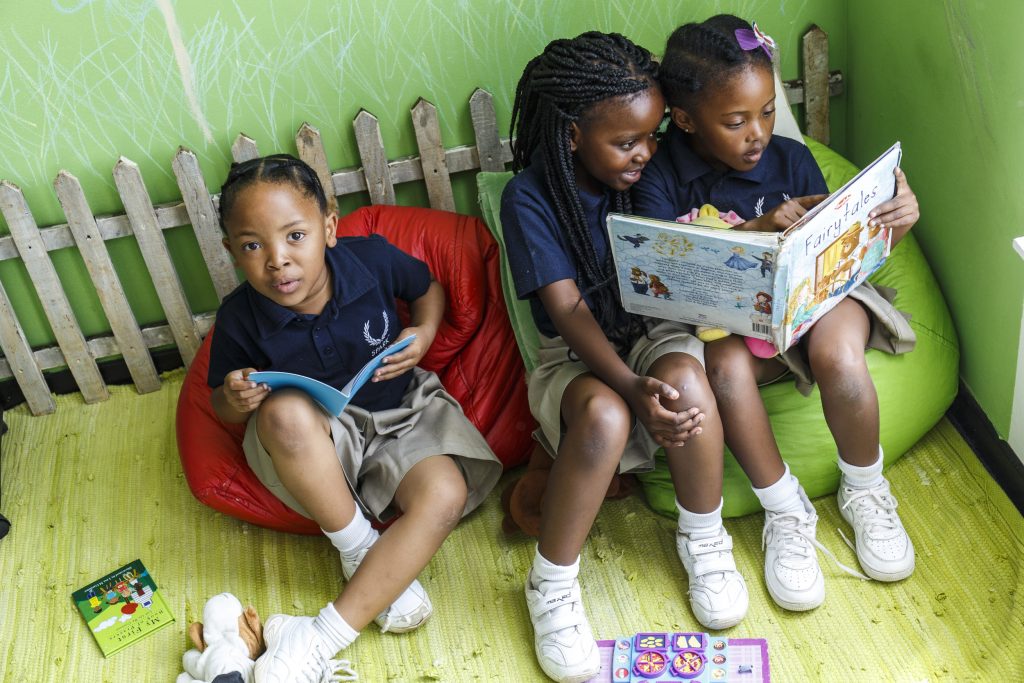

A love of reading doesn’t develop by chance. It is built early through everyday habits that shape how children experience books – not as work, but as discovery, imagination, and connection. And, these habits start at home.
Tasleem Sather, Education Programme Lead at SPARK Turffontein, explains that while educators play a critical role in shaping early literacy, parents have an equally important role, which begins long before children enter the foundation phase of schooling.
Sather shares five simple ways parents can teach their children to love books:
- Read aloud every day: Shared reading is one of the most powerful ways to build early language skills, attention span, and comprehension. When you read aloud, even for just 10 minutes a day, you’re exposing your child to new vocabulary and modelling how language works in context. The key is consistency and warmth rather than performance or pressure. Make it a relaxed, enjoyable moment where your child associates books with comfort, connection, and curiosity.
- Let your children choose their own books: Children are far more likely to engage when they feel a sense of ownership over what they’re reading. Allowing them to choose what they read gives them agency and builds motivation. This matters because it makes reading something they want to do, not something they’re told to do. Even if their choices seem simple or repetitive, the goal is engagement, not perfection.
- Make reading interactive: Reading becomes far more powerful when it’s turned into a conversation. Use different voices for characters to bring the story alive, ask your child questions about the story, and ask what they think will happen next. This deepens comprehension, strengthens memory, and builds critical thinking skills in a natural way. It also helps children feel included, which boosts confidence.
- Create a routine and space: Children thrive on consistency, and a predictable reading routine helps turn books into a normal part of everyday life. Setting aside a dedicated reading time, paired with a comfortable, distraction-free space, helps form healthy reading habits. When children associate a calm, inviting space with reading, they’re more likely to settle into books independently and develop focus and enjoyment.
- Lead by example: Children learn as much from what they observe as from what they’re told. When they see their parents reading regularly, they begin to understand reading as a normal and valuable part of daily life. Over time, the example parents set helps embed reading as a lifelong habit rather than something limited to schoolwork.
On World Book and Copyright Day, held every year on 23 April, educators are again drawing attention to how critical early literacy is, particularly in South Africa, where reading outcomes remain a national concern.
The 2030 Reading Panel’s latest report highlights the scale of our early literacy challenge. It shows that 15% of Grade 3 learners are unable to read a single word by the end of their third year of schooling, and only 30% of Grade 1–3 learners are reading at grade level in their home language. The impact stretches across the curriculum, limiting further learning in subjects such as science, technology and mathematics.
Sather says that schools alone can’t close this gap. “At SPARK Schools, we see literacy as a foundational life skill. Our personalised learning model allows us to respond to each scholar’s pace and strengths, building not only reading ability but also communication skills, confidence, and critical thinking. But the habits that truly shape lifelong readers begin at home, where children first experience the joy of books.”
For more articles like this click here.
If you enjoyed this website then check out our other sites: Wedding and Function, Home Food and Travel, Thirsty Traveler, Boat Trips for Africa, Bargain Buys, Business Link.
Need help with your online marketing then visit Agency One.